


BLOG
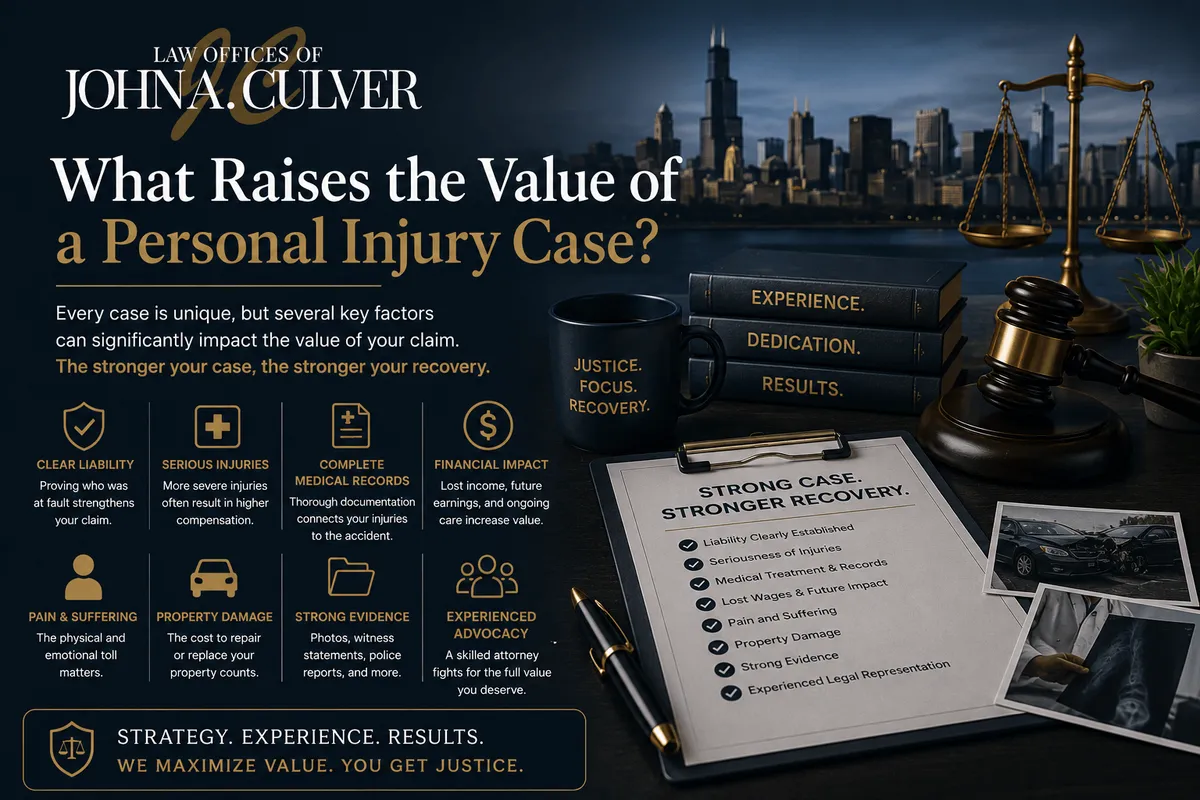
What Raises the Value of a Personal Injury Case?
Introduction
After a serious accident, one of the first questions many injured people ask is whether their case is “worth a lot” or likely to result in only a small settlement. What many people quickly discover is that personal injury cases are not valued using a simple formula.
Two accidents that seem similar at first can end up producing very different outcomes. One claim may settle for a relatively modest amount, while another involving the same type of accident leads to substantially higher compensation.
The reason is that the value of a personal injury case depends on several interconnected factors. Injury severity, medical evidence, long-term financial impact, liability strength, and insurance coverage can all influence how insurance companies and courts evaluate a claim.
For injury victims in Chicago, Illinois, understanding what actually increases case value can help clarify why some claims become much more significant than others.
Serious Injuries Usually Increase Case Value the Most
The severity of the injury is often the single biggest factor affecting the value of a personal injury claim.
Minor injuries may involve temporary discomfort and short-term medical treatment. More serious injuries often create lasting physical, emotional, and financial consequences that significantly increase damages.
When injuries permanently affect a person’s daily life, earning ability, or future medical needs, the overall value of the claim typically rises as well.
Permanent Injuries Often Lead to Larger Claims
Some injuries continue affecting a person long after the initial accident.
This may include:
Insurance companies usually evaluate these cases differently because the financial impact often extends far into the future.
Long Recovery Periods Matter
The duration of recovery also affects claim value.
A person unable to work for several months after a Chicago car accident will generally face larger economic losses than someone who returns to work quickly after minor treatment.
Long recovery periods may increase compensation involving:
Medical expenses
Lost wages
Rehabilitation costs
Pain and suffering
Loss of normal activities
The longer the injury disrupts a person’s life, the more significant the damages may become.
Strong Medical Documentation Can Substantially Affect a Claim
Medical records play a major role in personal injury cases because they connect the accident directly to the injuries being claimed.
Without strong documentation, even legitimate injuries can become more difficult to prove.
Consistent Treatment Strengthens the Case
Insurance companies closely review whether injured individuals followed recommended treatment plans after the accident.
Gaps in treatment sometimes allow insurers to argue that:
The injuries were not serious
Recovery was already complete
The accident did not cause all symptoms
Other medical conditions contributed to the problem
Consistent medical care creates a clearer timeline showing how the injuries developed and affected the person over time.
Specialist Opinions Often Carry More Weight
In more serious Chicago personal injury claims, specialist evaluations may significantly strengthen the case.
This may involve:
Orthopedic surgeons
Neurologists
Pain management specialists
Physical rehabilitation experts
Vocational professionals
Detailed medical opinions can help explain future limitations, ongoing treatment needs, and permanent impairments more clearly.
Liability Strength Influences Settlement Value
A strong injury claim is not based only on damages. The ability to clearly prove fault also affects settlement negotiations.
Insurance companies are generally more willing to offer substantial compensation when liability is difficult to dispute.
Clear Evidence Often Improves Negotiations
Cases supported by strong evidence tend to place more pressure on insurers during settlement discussions.
Helpful evidence may include:
Police reports
Surveillance footage
Witness statements
Vehicle damage analysis
Accident reconstruction evidence
When fault appears obvious, insurance companies often focus more heavily on damage valuation rather than disputing responsibility.
Shared Fault Can Reduce Compensation
Illinois follows modified comparative negligence rules. This means compensation may decrease if the injured person is found partially responsible for the accident.
For example, if someone is determined to be 20% at fault, the compensation award may also be reduced by 20%.
Because of this, disputes over fault can directly affect the overall value of a Chicago injury claim.
Future Financial Losses Can Increase Damages Significantly
Some accidents create losses that continue far beyond the initial medical bills.
When injuries interfere with future earning capacity or create long-term expenses, claim value often increases substantially.
Lost Earning Capacity Is Different From Lost Wages
Lost wages typically involve income missed during recovery.
Lost earning capacity involves future financial impact. This may apply when injuries prevent someone from:
Returning to the same profession
Working full-time
Performing physical job duties
Advancing in their career
In catastrophic injury cases, future income losses may become one of the largest components of the claim.
Ongoing Medical Needs Add Long-Term Costs
Some injuries require treatment for years after the accident.
Long-term expenses may involve:
These projected costs are often included when evaluating serious injury claims in Chicago, Illinois.
Pain and Suffering Damages Can Strongly Affect Case Value
Economic losses such as medical bills are easier to calculate directly. Non-economic damages are more subjective but can still become a major portion of the claim.
Pain and suffering damages often reflect how deeply the injury affected the person’s quality of life.
Lifestyle Changes Matter
A serious injury may affect much more than physical health.
The injury may interfere with:
Family activities
Hobbies
Exercise
Social interaction
Independence
The more significantly an accident changes a person’s daily life, the more substantial non-economic damages may become.
Emotional Effects May Also Be Considered
Some accident victims experience ongoing emotional trauma following serious injuries.
This may include:
Anxiety
Depression
Sleep disturbances
Fear of driving
Emotional distress
These effects can contribute to the overall valuation of the claim when properly documented.
Insurance Coverage Can Affect Realistic Recovery Amounts
Even strong cases may face practical limitations based on available insurance coverage.
A case involving severe injuries may still encounter recovery limits if the at-fault party carries limited insurance.
Multiple Insurance Policies May Become Relevant
Some Chicago injury claims involve several possible sources of coverage.
Depending on the accident, this may include:
Auto liability insurance
Commercial insurance policies
Umbrella coverage
Uninsured motorist coverage
Employer liability policies
Identifying all available coverage can affect the total compensation available in the case.
Cases Often Become More Valuable When Evidence Is Preserved Early
Early evidence collection can make a major difference in how effectively damages and liability are proven later.
Important evidence sometimes disappears quickly after an accident, especially in cases involving surveillance footage, vehicle damage, or witness recollection.
Strong early documentation may improve the claim by preserving:
Accident scene evidence
Injury photographs
Witness information
Medical timelines
Vehicle inspection data
Well-preserved evidence often creates stronger negotiating leverage during settlement discussions.
Frequently Asked Questions
Does a higher medical bill automatically mean a larger settlement?
Not always. Medical expenses are important, but injury severity, long-term impact, and liability strength also influence claim value.
Can pain and suffering increase compensation?
Yes. Pain, emotional distress, and lifestyle limitations may all contribute to non-economic damages in a personal injury case.
Do all serious injuries lead to high settlements?
Not necessarily. Insurance coverage limits, liability disputes, and evidence issues can still affect the outcome.
How does permanent disability affect an injury claim?
Permanent disabilities often increase claim value because they may involve ongoing treatment, future financial losses, and reduced quality of life.
Can social media affect a personal injury case?
Yes. Insurance companies sometimes review social media activity when evaluating injury claims and disputing damages.
Conclusion
The value of a personal injury case depends on much more than the accident itself. Injury severity, medical documentation, liability evidence, future financial losses, and long-term lifestyle impact all play major roles in determining how a claim is evaluated.
Cases involving permanent injuries, ongoing medical care, and strong supporting evidence often involve more substantial compensation because the effects of the accident extend far beyond the initial recovery period.
For individuals pursuing injury claims in Chicago, Illinois, understanding what increases case value can help provide clearer expectations during the legal process. The Law Offices of John A. Culver represents clients facing a wide range of serious injury claims throughout the Chicago area.
