


BLOG
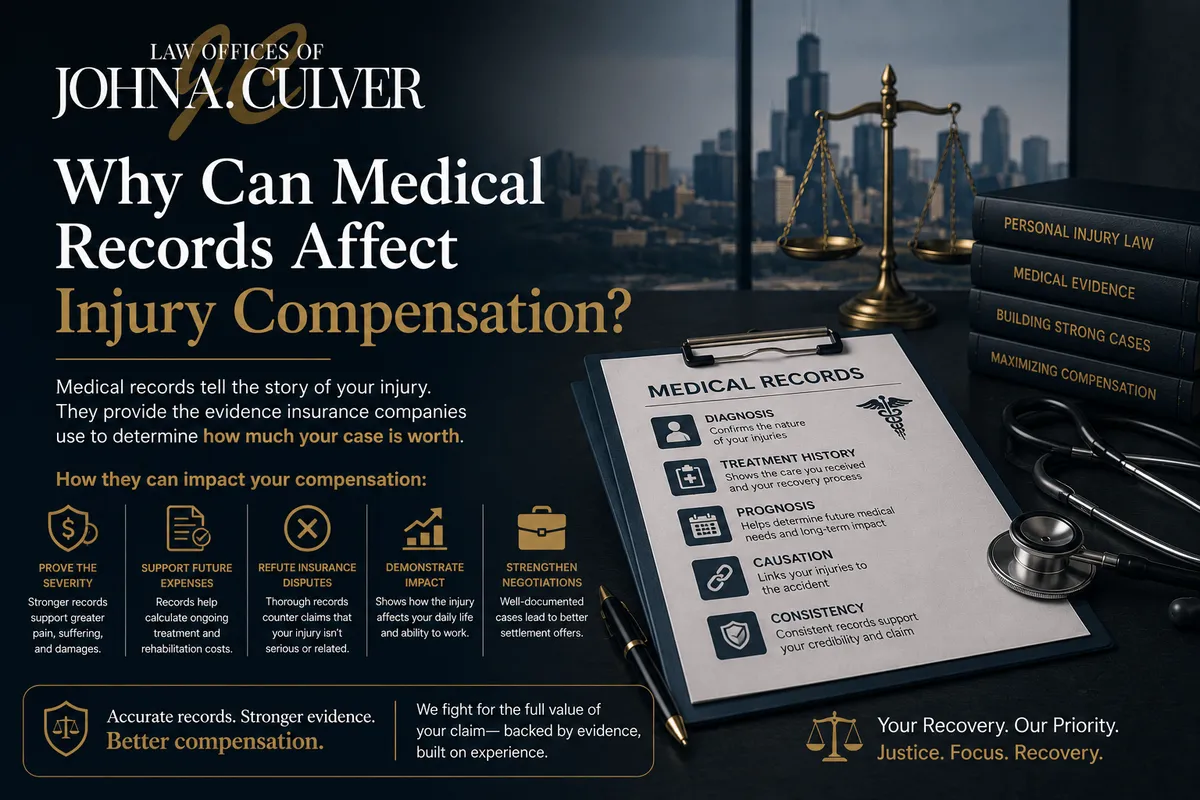
Why Can Medical Records Affect Injury Compensation?
Introduction
After an accident, many people focus primarily on medical treatment and physical recovery. What they often do not realize immediately is how heavily their medical records may influence the outcome of a personal injury claim later.
In injury cases throughout Chicago, Illinois, medical records are one of the main tools insurance companies use to evaluate compensation. These records help determine how serious the injuries are, whether the accident caused them, how long recovery may take, and whether future medical care could still be necessary.
Even when someone suffers legitimate injuries, weak or incomplete documentation can create major problems during settlement negotiations. On the other hand, clear and consistent records often make it easier to demonstrate the full impact of the accident.
Medical records do not simply describe treatment. In many cases, they become the foundation of the entire injury claim.
Medical Records Connect the Injury to the Accident
One of the first things insurance companies examine is whether the injuries clearly relate to the accident itself.
Medical documentation helps establish this connection by creating a timeline that begins shortly after the incident and continues throughout treatment.
When someone seeks prompt medical attention after a Chicago car accident or slip and fall injury, the records usually show:
When symptoms began
What injuries were diagnosed
How the accident occurred
What treatment was recommended
How the condition progressed over time
Without that timeline, insurers may argue that the injuries came from something unrelated or existed before the accident happened.
Delayed Treatment Often Creates Questions
A delay between the accident and medical care can sometimes weaken the claim.
Insurance companies may question:
This does not automatically destroy a case, but it often creates additional arguments during settlement negotiations.
Consistent Treatment Helps Demonstrate Injury Severity
Insurance companies usually look for patterns when evaluating injury claims.
Consistent medical care often suggests the injuries genuinely interfered with the person’s life and required ongoing attention.
If treatment appears irregular or inconsistent, insurers sometimes argue that the condition was not as serious as claimed.
Gaps in Medical Care Can Complicate Claims
Large gaps between appointments may create opportunities for insurers to dispute damages.
They may argue:
The injury improved quickly
Treatment was unnecessary
Symptoms were exaggerated
Recovery was already complete
In Chicago personal injury claims involving soft tissue injuries or chronic pain conditions, these arguments appear frequently because insurers already tend to scrutinize injuries that are harder to measure objectively.
Follow-Up Care Often Strengthens Documentation
Ongoing evaluations help show how the injury affected the person over time rather than only immediately after the accident.
This can become especially important when injuries involve:
Chronic pain
Mobility limitations
Long-term rehabilitation
Neurological symptoms
Permanent impairments
The longer the condition continues, the more important detailed medical tracking often becomes.
The Language Used in Medical Records Matters
Medical records are not simply collections of bills and appointment dates. The wording inside them can significantly influence how a claim is evaluated.
Insurance adjusters and defense attorneys frequently review physician notes closely for details that support or weaken the injury claim.
Objective Findings Often Carry More Weight
Some medical evidence is considered stronger because it appears measurable or observable.
This may include:
MRI results
CT scans
Surgical findings
Fracture imaging
Neurological testing
Objective findings can strengthen a Chicago injury claim because they provide physical evidence supporting the diagnosis.
Physician Notes Can Affect Settlement Negotiations
Doctors may document information involving:
Even small wording differences inside treatment notes can influence how insurers interpret the severity of the injuries.
Pre-Existing Conditions Often Become a Major Issue
One of the most common insurance defense strategies involves arguing that the injured person already had similar medical problems before the accident.
Medical records play a central role in these disputes.
Prior Medical History Does Not Automatically Prevent Compensation
Having a pre-existing condition does not mean someone loses the right to pursue compensation after an accident in Chicago, Illinois.
However, insurers often attempt to separate:
Old injuries
Degenerative conditions
Prior symptoms
New accident-related damage
The question usually becomes whether the accident worsened the existing condition or created entirely new injuries.
Comparative Medical Records Become Important
When pre-existing conditions are involved, insurers may compare records from:
Before the accident
Immediately after the accident
Ongoing treatment periods
The clearer the medical distinction between old symptoms and new injuries, the stronger the injury claim often becomes.
Future Medical Treatment Can Increase Compensation
Medical records also help estimate future damages.
Some injuries heal relatively quickly. Others require long-term care, rehabilitation, or permanent lifestyle adjustments.
Long-Term Treatment Plans Affect Case Value
Doctors may document future needs involving:
Surgery
Physical therapy
Pain management
Medication
Assistive devices
Home care support
These projected expenses may significantly increase the overall value of a Chicago personal injury claim.
Permanent Injuries Often Require Expert Evaluation
In more serious cases, medical specialists may evaluate whether the injury will permanently affect:
Mobility
Employment
Physical function
Daily activities
Cognitive ability
These evaluations often become important when calculating long-term compensation.
Insurance Companies Look for Inconsistencies
Insurance companies frequently compare medical records against other information connected to the claim.
They may review:
Accident reports
Social media activity
Surveillance footage
Employment records
Prior medical history
If the records appear inconsistent with other evidence, insurers may use those inconsistencies to challenge the claim.
Minor Contradictions Can Become Larger Disputes
For example, disputes may arise if:
Symptoms change significantly over time
Activity levels appear inconsistent with injuries
Work limitations conflict with outside evidence
Treatment recommendations are ignored
This is one reason accurate and consistent communication with medical providers is often important after an injury.
Medical Documentation Can Influence Settlement Timing
Medical records affect not only settlement value but also how quickly negotiations move forward.
Insurance companies often hesitate to settle serious claims until the medical condition becomes more stable.
Ongoing Treatment May Delay Final Resolution
If doctors still expect recovery changes, future surgeries, or long-term complications, insurers may wait for additional medical clarity before evaluating the full claim.
This is common in Chicago injury cases involving:
Waiting for a more complete medical picture sometimes helps both sides better evaluate damages.
Frequently Asked Questions
Can missing medical records hurt an injury claim?
Yes. Missing or incomplete records may make it harder to prove injury severity, treatment needs, or the connection between the accident and the injuries.
Do insurance companies review all medical history?
Insurance companies may request medical records related to the injuries being claimed, especially if they suspect pre-existing conditions are involved.
Can medical records affect pain and suffering compensation?
Yes. Physician notes documenting pain levels, limitations, and emotional impact may help support non-economic damage claims.
What if symptoms appear days after the accident?
Some injuries develop gradually. Seeking medical attention once symptoms appear is still important for documentation purposes.
Can physical therapy records help a personal injury case?
Yes. Therapy records often show recovery progress, ongoing pain levels, and physical limitations over time.
Conclusion
Medical records affect injury compensation because they help determine how serious the injuries are, how clearly they connect to the accident, and how much the injuries have affected the person’s life. Strong documentation often becomes one of the most important parts of a personal injury claim.
Consistent treatment records, detailed physician notes, diagnostic imaging, and long-term medical evaluations all help create a clearer picture of the damages involved. Without that evidence, even legitimate injuries may become more difficult to prove during negotiations.
For individuals handling injury claims in Chicago, Illinois, understanding the role of medical documentation can help explain why treatment records matter so heavily throughout the legal process. The Law Offices of John A. Culver represents clients pursuing compensation for a wide range of personal injury claims across the Chicago area.
